Home Page. The Weld Industry
All Weld / Steels Programs
Ed's Training Materials
MIG Welding
Steels   > 4mm
MIG Welding
Steels < 4mm
Pulsed MIG Welding
MIG Welding Gases
MIG Welders And Equipment
Robots & Weld Management
Robots and MIG
Welding Tips
MIG / Flux Cored
Pipe Welding
Advice / QA MIG Welding Forum
Ed's Bio and Contact
Ed's Welding Projects

Welding Books

MIG Welding Book, Management
A Management & Engineers Guide to MIG Weld Quality, Productivity and Costs

Gas Metal Arc Welding Book
Manual and Robotic (MIG) Gas Metal Arc Welding Book

MIG and Flux Core Welding Book
Flux Cored and MIG weld process controls

Manual MIG Welding Book
Manual MIG Welding Process Control

(Also in Spanish)
" Proceso de Soldadur MIG Manual "

Welding CD's

Robot Welding CD
Robot MIG welding. Best Weld Practices and Process Controls

MIG Welding CD
Manual MIG Welding. Best Weld Practices and Process Controls

Flux Core Welding CD
Flux Cored Best Weld Practices and Process Controls

MIG Welding Process Controls
DVD Film "MIG Process Controls Made Simple"

Order these MIG Welding or Flux Cored Training Materials Now


Welding Software


ED CRAIG. www.weldreality.com.

The world's largest website on MIG - TIG - Flux Cored Welding


Page Title
Advanced TIP TIG Welders
2 to 10 times faster than TIP TIG Welding for superior
weld quality than Pulsed MIG and Flux Cored Welding


ESAB / ABB Arcitec Aluminum Welding Issues


Robot Welds on Ford
6061 Aluminum Car Seats.


During 2000, I was requested by an engineer at VAW a tier one supplier to analyze the welding performance of their ABB robot and ESAB Arcitec welding equipment. This plant produces extruded aluminum parts. The aluminum welded car seats were for Ford. The car seats and parts required small welds which were made on thin gage 6061 aluminum.

Criterion Machinery was the system integrator for the seat frame parts. Two ABB robot cells were ordered, ABB advised Criterion that their "Swedish Arcitec" welding power source could handle the thin gage aluminum welding requirements. The Arcitec power source claim to fame was, it was unique in that it was one of the first MIG power sources that was truly integrated into an ABB robot control panel.

Two ABB robot cells containing the Arcitec power sources were shipped to Criterion for initial fixture and weld tests. The weld tests carried out at this time were minimal as Criterion did not have the necessary weld process expertise to evaluate the Arcitec or any power source. The two units were then shipped to VAW the tier one supplier.

Since
the installation of the robot cells, continuous production of optimum weld quality parts has been impossible due to the issues documented in this report. Weld reject rates averaged sixty percent and the robot down time per hour averaged 20 to 30 minutes.

Many issues are documented and I have not included them all in this report, however the primary cause of the extensive weld quality and productivity issues at VAW was the ABB Arcitec power source . This weld equipment had extensive electronic problems. The bottom line is the weld results were inconsistent and unsuited to the needs for the high volume, small welds on the thin aluminum parts.


Arcitec Power source History.The Arcitec power source was manufactured by ESAB in Sweden in the late 1990s. The Arcitec was an inverter pulsed GMAW power source. This power source was integrated into the ABB S4/S4C robot controls in an attempt to improve the communication "response time" between the robot controller and welding power source.

I have extensive knowledge of Arcitec power source issues, as I was previously employed by ABB, the Swedish manufacturer of robots. My position with ABB was weld manager / senior weld process engineer. Part of my responsibility was to evaluate the application performance of new welding equipment which included the Arcitec.

I have evaluated many power sources during the last three decades and cannot recall any welding power source that even came close to the amount of welding Issues generated by the Arcitec. The bottom line, this equipment was introduced by ESAB to the market place without sufficient testing by ESAB.

The German marketing manager at ABB Fort Collins, made the mistake of believing the Swedish sales spiel from the marketing manager at ESAB about the capability of the Arcitec. Over 100 units were ordered to be installed in the ABB robots for North America. As I tested the Arcitec and found the erratic performance and many other issues, I documented the faults and the demonstrated the issues to the ABB marketing manager, as this manager had foolishly ordered approx one million dollars worth of Arcitec inventory he was not happy with my reality and he ignored the Arcitec test results and my reports.
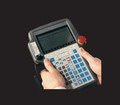

As a result of the never ending software / hardware issues and erratic performance from the Arcitec, eventually ABB did reduce it's focus and promotion of the European ESAB package and instead focused on promoting either the slightly less inconsistent Miller Invision, and Lincoln Power Waves.

Four years after the introduction of the erratic Arcitec, I was requested by VAW to evaluate their poor performing robot installations. I knew the installation had an Arcitech power source, however I was under the impression that the poor performing Arcitecs were taken out of service and I would be examining new ESAB units that had evolved electronically from the original equipment I had evaluated four years previously. What I saw while welding at VAW was I believe the same Arcitech power sources which were manufactured four years earlier. The units I tested at VAW certainly had the same unique electronic glitches causing burn backs and other issues which I was familiar with, and the power sources still produced an inconsistent output weld voltage and weld performance.


VAW History of Arcitec:


[] A few months after VAW accepted the robot cells, "three Arcitec power sources were replaced" by ABB. The typical life of a traditional MIG power source is 10 years without requiring repairs. With the more sophisticated, inverter pulsed equipment one would anticipate that this equipment should at least last till the warranty runs out, which is typically two to three years.

[] Five months after the robots were installed, the two robots with replaced Arcitech equipment were unable to produce consistent, acceptable weld production or quality. Weld reject rates were in the 60-70%% range and the production cycle efficiency rarely attained 40%.

[]A Primary Weld Issue. "Wire Burn Backs"
From a weld production perspective the most serious issue was the numerous welding wire burn backs which were generated during the arc starts. The wire burn-backs have also been a dominant cause in the abnormal weld reject rate .

A MIG wire burn-back when aluminum welding can affect the weld in the following manner. During a burn-back the welding wire disintegrates in the arc and either cleanly breaks off or welds itself to the contact tip. With aluminum, a poor arc generated during a faulty arc ignition can produce a highly oxidized surface, resulting in a dirty gray area. The arc restart location with its oxidized aluminum surface, is a poor electrical conductor. When the robot tries to re-strike and create an arc on this contaminated surface, either the arc will not re-ignite or the weld will be damaged with the contamination.


A burn back with the aluminum wire can result in the welding wire welded or trapped in the contact tip similar to the steels wires shown on the left. The tension that results on the soft aluminum wire as it's fed can cause the wire to spiral and wrap tightly around the drive rolls. In a one hour production run on the 19 0ct, 2000, I witnessed on one robot four burn-backs causing a 22 minutes or 32% per hour production loss.


It should be noted that there are many reasons for consistent wire burn backsand as I have written Welding books on the subject I am very familar with the data requirements for burn back prevention. In the start and end data, optimum data was provided to minimize the burn backs, but it had no effect. A primary cause of wire burn-backs with aluminum is poor wire feed tension, however on this system we had push pull wire feed systems and had excellent wire tension as tested when the wire exited the gun tip.


Arc Sounds and Arc Inconsistencies: During the test of both cells, each cell was set with the same data yet there was no similarity with the welds produced or the arc sounds attained. As was evident to anyone standing close to the ABB cells when welding the aluminum parts, the resulting Arcitec "arc sounds" were extremely erratic and inconsistent. I kept things simple and only utilized two weld schedules and I ensured the wire stickout length was optimum and constant. The abnormal weld parameter changes that occurred during the weld were noted on voltmeters and the weld voltage variations during the small weld cycle times were extensive.

Arc Ignition Issues: At the arc starts, the ignition voltage would frequently flare up to excessive levels damaging the parts and causing wire burn-backs

When welding thin gage aluminum the degree of difficulty is increased when the welds are small in length. With a small weld the power source must have the capability of "responding inside the weld cycle times". In this case the weld cycle times average two to four seconds.

With the Arcitec the welds required;

[a] weld start data,
[b] weld data, and
[c] weld end data.

These units which were sold on the basis of their fast communication between the power source and robot control, lacked the electronic sophistication necessary to handle the weld changes in the 2 to 4 second cycle times.

Note: I noted the exact same power source symptoms on ABB / Arcitec units installed at a Mexican car seat plant approximately three years previous. This plant used the short circuit and spay modes for carbon steel welds on the new VW Beetle car seats.

After a day of evaluation and documenting the issues with the Arcitech VAW asked that I contact ABB about their power sources. The ABB engineers initial response to the problems was that the people at the auto plant were not capable of handling the sophisticated ABB technology. ABB sent one of their most experienced tech reps. After many hours he was unable to run either unit in an acceptable weld production mode. Frustrated the ABB rep apologized and left.

I had arrived at the plant on Monday. It was now Wednesday. On Friday. Ford Motor company reps were coming to witness an optimum robot run off of their aluminum car seats. I advised we pull out the Arcitec equipment and replace it with welding equipment I knew could handle the application.

This was a highly complex operation as the Arcitech and robot control were one. I brought in a very competent integrator and on Thursday evening the installation of new OTC equipment was complete. At midnight Thursday I had set the optimum weld data and was able to produce consistent quality welds with minimum robot down time. Ford came in the next morning of course having no knowledge of what had happened during the week. Ford was very pleased with the run off and gave the green light to VAW to start full production the following week.


I MADE THE FOLLOWING RECOMMENDATIONS TO VAW TO ENSURE
THE ROBOTS PERFORM CONSISTENTLY EACH SHIFT:


Implement Effective Weld Process Controls,

This data should be posted where the robot operator can view it.


Operator before production commences.

[1] Check fixture, ensure weld spatter does not cause issues and fixture clamps are fully functional.

[2] Check amount of wire available, have a spare Alco Tec De-reeler with quick connections.

[3] Check wire tension at shift start and after lunch.

[4] Check the correct part program is in use and positioner is in correct position.

[5] Run automatic TCP control at the shift start and ensure this function is frequent during production

[6]Start shift with new tip, repeat after lunch.

[7] Ensure nozzle is clean, and nozzle reamer and anti-spatter is used frequently.

[8] At shift start purge gas and check gas flow.

[10] Check wire helix at shift start, adjust wire straighten if necessary.

[11] Check part tube bore for excess weld penetration.

[12] Operators watch for repeat weld issues and immediately report them to programmer,

[13] Operators must check that all the welds are in place and the welds are acceptable.

[14] Ensure all parameter settings for weld schedules, ensure wire feed, voltage and amps are adhered to.

[15] The first production part should be approved by the programmer or supervisor before production commences.

[16] Ensure operators are aware of what they can, and cannot adjust. Operators cannot change the pre-qualified weld data.

[17] Ensure operators use templates for positioning gun height or angles.

[18] The robot operators must be trained to recognize weld sounds and weld issues


Management Responsibility:

[]Each shift will require a VAW individual capable of addressing programming issues.
[]Provide operators and programmers with well defined job description.
[] Recognize the importance of the programmer position, provide bonus incentive for quality and productivity goals.
[]Consider in future the use of PLC controls for the robot cells to help simplify the operation of the robot.
[] Consider in future the use of positioner's that hold more than two fixtures.
[] Tag equipment with all settings;
[] Provide lock for OTC control panel.
[] On your next project. take a look at the meaning of management and engineering process ownership and provide process control welding training for your selves and employees.


Conclusion.
The problems at VAW were extensive and had gone on for more than a year. This was not a robot issue, the ABB robots were fine, it was simply a process issue. It took the integrator team and myself FORTY EIGHT HOURS to get this unit running at over 85% efficiency with minimum weld rework. There are many lessons that can be learnt from this installation. The prime lesson when it comes to welding,remember sales talk is cheap. Before purchasing a robot welding cell have the robot supplier prove the welding process with an extensive run off with your application. Only deal with robot companies or integrators that recognize and show some concern for the consequences of their recommendations. I would recommend you take legal action against the parties involved for your costs, however I believe you probably wont.

Remember this event took place a few years ago, I would hope after spreading poor performing Arcitecs around North America and Europe that ESAB has got it's act together and the ESAB management has employed people that can actually test a welding machine so today's Arcitec are without welding problems.


I was paid approx. $5000 for my 5 day visit VAW. I don't believe ABB or ESAB
or Criterion Machinery were sued, and I did not recieve a Hall Mark thank you card from them, pity!

Back to Ed Craigs Welding Projects